
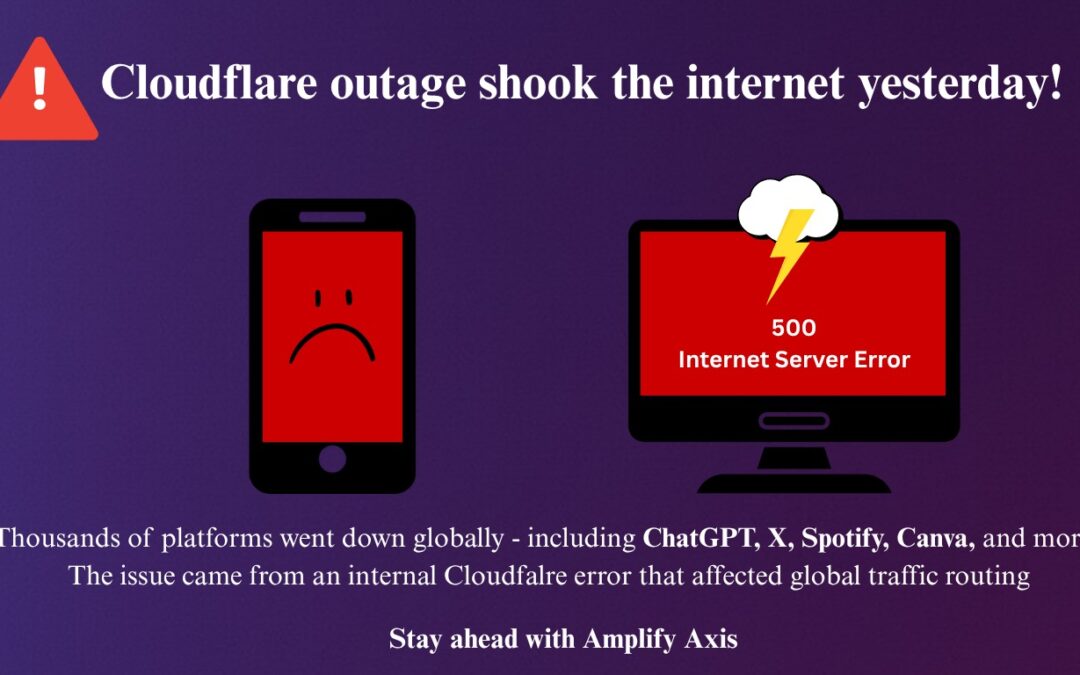
Cloudflare’s global outage on November 18, 2025, stands as a stark reminder of the internet’s interconnected fragility, with ripple effects that saw leading platforms like ChatGPT, X (formerly Twitter), Claude, and Perplexity go dark for hours. The episode not only disrupted access to some of the world’s most-used digital services but also ignited important conversations about technical dependency, business continuity, and how companies can safeguard trust during digital crises.
What Happened: The Anatomy of the November 2025 Outage
Cloudflare, a leading cloud internet security and infrastructure provider, began experiencing severe issues at approximately 11:20 UTC. As core network traffic failed to route properly, internet users globally were met with error pages and failed login attempts. Initially, there was confusion about the root cause—whether this was a cyberattack or internal failure.
Key affected services:
- ChatGPT from OpenAI
- X (formerly Twitter)
- Claude by Anthropic
- Perplexity AI
- Other popular SaaS platforms
Cloudflare quickly issued a status update confirming an “internal service degradation,” while multiple platforms informed users why services were inaccessible.
Root Cause and Technical Details
The outage was triggered not by an attack but by human error: a change to database permissions led to a glitch in the company’s Bot Management system. As new permissions rolled out, the system began generating abnormally large feature configuration files. These oversized files were repeatedly propagated across the global network, overwhelming Cloudflare’s core proxy that routes traffic for its customers.
The technical sequence:
- At 11:05 UTC: Database access control changes are deployed.
- 11:28 UTC: Outage begins as errors spike.
- 11:31–13:05 UTC: Teams investigate and attempt rollout mitigations.
- 14:24 UTC: Team identifies and halts deployment of faulty configuration files.
- 14:30 UTC: Most traffic flows return to normal.
- By 17:06 UTC: Services are considered fully restored.
Initially, the intermittent nature of the outage (with traffic sometimes recovering, sometimes failing) led staff to suspect a DDoS attack. However, a pattern emerged: each time an updated part of the data cluster generated files, network errors followed, confusing outward diagnostics and complicating the response.
Global Impact: Scale of Disruption
This outage represented the worst breakdown at Cloudflare since 2019, as acknowledged by its CEO. With Cloudflare handling core networking, security, and performance for millions of websites, the cascading effect was broad:
- Core CDN and security services returned repeated HTTP 5xx errors
- Logins, authentication, and dashboard access for Cloudflare users (such as developers and administrators) failed widely
- Workers KV, a critical component for many serverless and application backends, also returned errors, impacting downstream services
- Login access via Cloudflare’s authentication (Turnstile) broke, preventing access to dashboards and APIs for affected periods
End users lost access not only to entertainment and productivity platforms but also to business-critical and government services. This wide reach underscores why internet infrastructure outages are now headline news globally.
How Cloudflare Responded
From the moment alarms were raised, Cloudflare’s engineering and incident response teams launched a multi-pronged investigation:
- Rapid rollback: Replacing broken configuration files with older, working versions
- Pausing deployment: Halting all new configuration files that could reintroduce the bug
- Manual and automated testing: Isolating the bug’s impact and restoring individual failed components (including Workers KV and authentication services)
Company executives and product teams communicated openly throughout, issuing regular status page updates and directly apologizing to customers and partners. Transparency, they emphasized, would remain the standard, citing 2019’s catastrophic outage as a prior learning point.
Business and User Lessons
For marketers, SaaS providers, and digital businesses, the episode had immediate and long-term consequences:
- Customer trust: Downtime for campaigns, landing pages, and signup flows resulted in lost leads and sales
- User confidence: People expect digital services to “just work,” so prolonged outages raise reputational risk
- Technical exposure: Reliance on a single CDN or security provider, even one as established as Cloudflare, creates potential single points of failure
Leaders both within and outside Cloudflare have now reaffirmed best practices:
- Multi-provider redundancy: Consider a multi-CDN strategy for critical pathways
- Incident playbooks: Predefined communication and recovery checklists help mitigate chaos
- Automated monitoring: Use third-party and self-hosted tools to gain independent visibility into uptime and performance
Ongoing Remediation and Next Steps
Cloudflare has begun implementing several major safeguards to prevent recurrence:
- Hardening ingestion systems for configuration files to catch malformed or excessive data before propagation
- Enabling global “kill switches” for features that could rapidly cause issues
- Isolating error reporting dumps to prevent them from overwhelming system resources
- Broader review of core proxy failure modes to catch similar issues earlier in the future
Such steps will help strengthen one of the internet’s foundational platforms—but the broader lesson is clear: resilience and adaptability are the only reliable shields against the evolving risks of a digital world.
Conclusion: Vigilance in the Age of Centralization
The Cloudflare outage of November 2025 will enter the playbooks of emergency response and risk management teams worldwide. For the digital-first era, it is a cautionary tale—about technical complexity, the dangers of single points of failure, and the saving power of honest, fast communication when things go wrong.
As organizations and individuals build towards a more robust and resilient internet, this incident will continue to shape policies, architectures, and expectations for the years ahead.